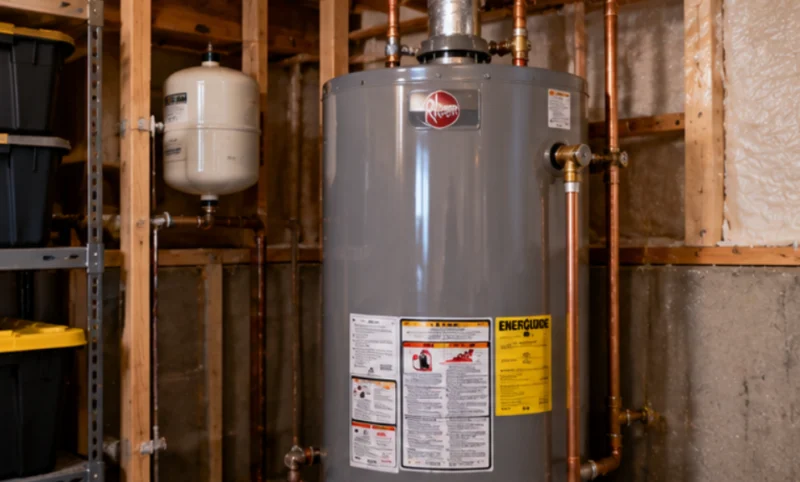
Your water heater is leaking, taking longer to recover, or running cold halfway through a shower, and now you are holding two quotes at very different prices. Picking wrong means either overpaying for capacity you do not need or living with a unit that cannot keep up on a January morning. This guide walks the tank vs tankless water heater choice as it actually plays out in a Denver home, so you can tell which number on the quote is worth paying.
For most homes here, a standard tank is the simpler, cheaper replacement and keeps up fine for average demand. Tankless makes sense when you want continuous hot water, have the gas or electrical capacity for it, and plan to stay long enough to earn back the higher install cost. The factors that decide it are your peak simultaneous hot water use, your fuel type, and what your existing gas line, venting and panel can support without expensive upgrades.
Tank or Tankless: What's the Real Difference?
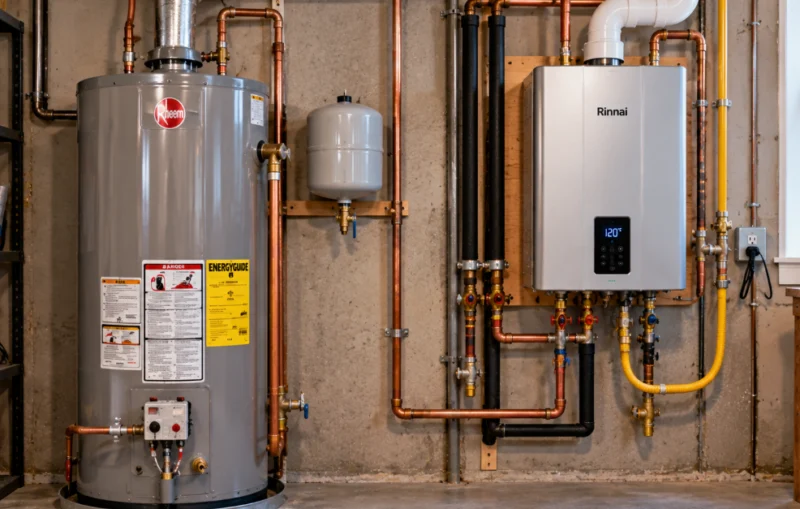
A storage tank keeps 40 to 50 gallons hot around the clock, reheating it with a burner or elements as the water cools. You draw from a reservoir, so the limit is how much is stored and how fast the unit recovers. When the tank empties faster than it can reheat, you get the cold mid-shower moment.
A tankless unit stores nothing. Water passes through a heat exchanger that fires only when a tap opens, heating it on demand. The limit is no longer gallons stored but flow: how many gallons per minute it can raise to temperature at once. Run more fixtures than it can handle and the temperature sags.
That difference shapes everything that follows, including lifespan. A storage tank typically lasts 8 to 12 years before the liner corrodes, while a tankless unit often reaches 15 to 20 years with regular maintenance. But lifespan only pays off if the unit is sized to the household, and that is where most replacements go wrong.
How Do You Size a Water Heater So It Keeps Up?
Sizing, not type, decides whether hot water keeps up. For a tank, the number that matters is the first-hour rating, which combines stored volume with recovery speed. Common residential tanks hold 40 to 50 gallons, but two tanks of the same size can deliver very different amounts in that critical first hour, depending on burner output.
That is why raw gallons mislead people. A 50-gallon tank with a strong burner recovers faster between draws than one with a weak burner, so it supplies more hot water over a busy morning even though the label reads the same. The real test is back-to-back showers, not three running at once.
Tankless is rated in gallons per minute, commonly 4 to 8 GPM depending on the temperature rise it has to produce. A single shower uses roughly 1.5 to 2.5 GPM, so two showers and a sink can outrun a smaller unit. A good installer sizes the unit to your peak simultaneous demand rather than simply recommending the largest model available.
Fuel plays into this too. A like-for-like gas tank replacement can often make use of existing infrastructure, provided the gas supply, venting, and installation still meet the equipment and code requirements. An electric tank is simple where no gas is present but may recover more slowly depending on the model.
Whole-home gas tankless models often provide higher flow capacity than electric tankless units, which can require substantial electrical service when a large winter temperature rise is needed. Match the fuel to what the home already supports, and the tank-versus-tankless answer gets clearer.
Why Does Tankless Cost More to Install?
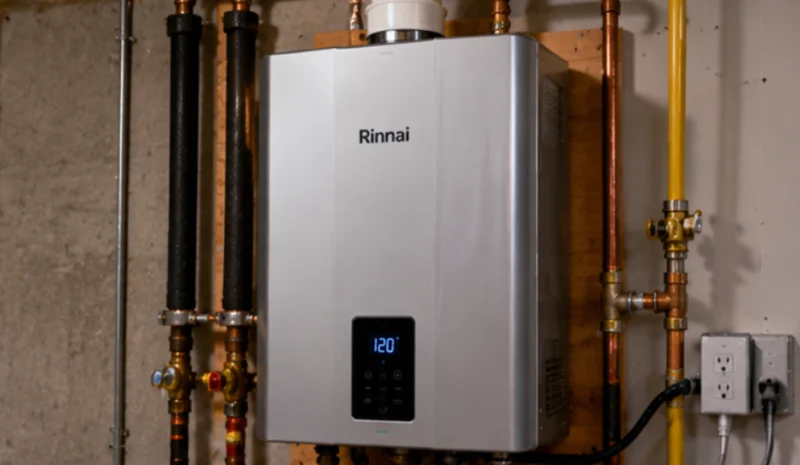
The unit itself is only part of a tankless quote. The rest is infrastructure, and much of the metro's housing predates the gas-line and panel sizing a tankless retrofit often needs. These are the four things that move the price above a straight tank swap.
Gas Line Sizing
A gas tankless unit fires at a far higher BTU rate than a tank, often two to three times as much, because it heats on demand instead of slowly. An older half-inch gas line that fed a tank may not carry enough volume, so the installer has to run a larger line back toward the meter. That pipe run is labor and material a tank never needs.
Venting Requirements
A tankless unit produces different exhaust and usually cannot reuse the tank's old vent. Many condensing tankless models use manufacturer-approved plastic venting, with the intake and exhaust routed to an approved termination based on the equipment and installation. If the old water heater shared a chimney with the furnace, removing it can also affect how that furnace vents, which has to be checked.
Electrical Capacity
Even a gas tankless unit needs a dedicated circuit for its controls and ignition. An electric tankless unit is a bigger ask entirely, drawing heavy amperage that often requires a panel upgrade and multiple circuits. In an older home with a full panel, that electrical work can quietly become the largest single line on the quote.
Labor and Access
Mounting a tankless unit, rerouting water lines, adding a condensate drain and commissioning the controls simply takes longer than sliding in a replacement tank. Because tankless installation can involve gas piping, venting, plumbing, or high-amperage electrical work, use a contractor qualified for the applicable scope and confirm any required Denver permits or licensed trades.
Those upgrades are where two quotes can diverge significantly, so compare the full installed cost rather than the equipment price alone. Next comes the one local condition that changes tankless sizing outright.
How Does Cold Inlet Water Change the Tankless Decision?
Cold inlet water quietly shrinks what a tankless unit can deliver. Denver's incoming water can be substantially colder in winter. The colder the water arriving, the further the unit has to lift it to a usable shower temperature, a much larger temperature rise than a mild climate demands.
Here is why that matters: a tankless unit's GPM rating assumes a certain temperature rise, and the rating falls as the rise climbs. A unit advertised near the top of its 4 to 8 GPM range in warm conditions can land at the bottom of it in the coldest month. A unit that looked big enough on the box can run short exactly when you want hot water most.
So a tankless heater here has to be sized for the coldest month, not the average one. That often means stepping up a model size, which raises both the equipment cost and the gas or electrical demand behind it. Cold inlet water affects both systems, but it is especially important when sizing tankless equipment because the available flow rate changes with the required temperature rise.
How Long Does Each Type Last, and What Does It Cost to Keep?
Install price is only half the decision; upkeep and lifespan carry the rest. A tank is generally simpler to maintain but shorter-lived, while a tankless unit can last longer with regular maintenance. Denver Water classifies its supply as soft to moderately hard, but mineral scale can still form, so flushing or descaling should follow the manufacturer's guidance and actual water conditions.
| Factor | Tank | Tankless | Why it matters |
|---|---|---|---|
| Service life | 8 to 12 years | 15 to 20 years | Longer tankless life can offset its higher install cost if you stay put |
| Maintenance | Flush sediment as recommended | Flush or descale based on manufacturer guidance and water conditions | Mineral buildup can reduce efficiency and flow over time |
| Common issues | Sediment, corrosion, heating-element or burner faults, and leaks | Scale, ignition or sensor faults, flow problems, and heat-exchanger issues | Both systems can develop multiple failure modes as they age |
The practical read is that tankless rewards an owner who maintains it and stays long enough to use those extra years. If you are considering an all-electric home, compare a standard electric tank with a heat-pump water heater separately because their electrical needs, efficiency, installation requirements, and available incentives differ.
Tank vs. Tankless Water Heater: Which One Fits Your Denver Home?
Choosing between a traditional tank water heater and a tankless model depends on your household's hot water demand, existing utility connections, budget, and long-term plans. A storage tank is often simpler and less expensive to install, while a tankless system provides hot water on demand and can last longer with proper maintenance. The best choice is the one that meets your needs without requiring upgrades that outweigh its benefits.
Before choosing a replacement, consider these five factors:
- Peak hot water demand: Consider how often multiple showers, sinks, and appliances run simultaneously.
- Existing gas and electrical capacity: Tankless models may require gas line, venting, or electrical upgrades.
- Installation budget: Compare the full installed cost, including any necessary modifications.
- Water hardness: Mineral buildup can affect tankless performance, making regular descaling important.
- Long-term plans: If you expect to stay in your home for years, compare potential operating savings and equipment lifespan against the initial investment.
Ask your installer to provide separate, itemized estimates for a standard tank replacement and a tankless installation. This makes it easier to compare equipment costs, labor, required upgrades, maintenance needs, and expected operating expenses before committing to either option.
Choose the Right Water Heater for Your Denver Home
The right water heater depends on more than the equipment itself. Denver homeowners should work with qualified water heater technicians who can assess household demand, verify gas and electrical capacity, check venting requirements, and explain the advantages and limitations of each system. A professional evaluation helps prevent undersized equipment, unexpected installation costs, and avoidable performance problems.
Before making your decision, ask for clear recommendations and upfront pricing from an experienced Denver water heater professional. With the right guidance, you can choose a tank or tankless system that delivers dependable hot water, fits your budget, and makes sense for your home over the long term.
Why Choose Havana Solutions for Water Heater Services in Denver?
Choosing between a traditional tank water heater and a tankless system starts with understanding your household's hot water needs, installation requirements, and long-term budget. Havana Solutions helps Denver homeowners make informed decisions by considering these factors before recommending a replacement. The goal is to find a system that delivers dependable hot water without unnecessary equipment costs or unexpected installation upgrades.
Whether you're considering a straightforward tank replacement or upgrading to a tankless water heater, professional guidance can help you compare your options and understand the costs involved. Before making your decision, have your home's existing connections, hot water demand, and installation requirements evaluated by an experienced technician.
If you're ready to explore the right water heater for your Denver home, contact Havana Solutions at (720) 659-2059 to discuss your options and schedule professional assistance.
Frequently Asked Questions
Can I run a tankless water heater on electric instead of gas?
Yes, but electric tankless units draw heavy amperage and often need a panel upgrade plus multiple dedicated circuits. In a cold-inlet climate, where the unit has to produce a large temperature rise, a single electric unit may struggle to supply a whole house at once. Gas tankless usually handles the winter load more comfortably here.
Does a tankless water heater really give unlimited hot water?
It gives continuous hot water, but only within its flow rating. Run more fixtures at the same time than its GPM allows and the temperature drops, so "unlimited" means endless duration, not endless volume. That is why sizing to your peak simultaneous use still matters as much as it does with a tank.
How often does a tankless unit need maintenance?
Tankless maintenance should follow the manufacturer's guidance and your home's water conditions. Mineral scale can build inside the heat exchanger over time and reduce efficiency or flow, so periodic flushing or descaling may be needed.
Is a tankless water heater worth it if I plan to move soon?
If you plan to move soon, the higher upfront cost may be harder to justify on energy savings alone. Compare the full installed cost with the benefits that matter to you, including available space and hot-water demand.
What size tank do I need for a family of four?
There is no single tank size that fits every family of four. Start with the household's peak-hour hot-water demand and compare it with the unit's first-hour rating; fuel type and recovery rate also affect the right size.
Deivy, Owner of Havana Solutions
NATE Certified · EPA 608 Certified
Deivy founded Havana Solutions in 2022 and still works in the field, helping homeowners with AC, furnace and heat pump problems. He is NATE and EPA 608 certified and explains repair options clearly in English or Spanish.