If you live in a Denver-area condo or townhome and have never seen a furnace inside your unit, your home may use a hydronic air handler. Instead of burning gas inside the closet, this system receives hot water from a boiler or combination water heater and uses that water to heat the air moving through your existing ductwork.
The unusual part is that the same heat source can often handle another job at the same time: producing the hot water you use for showers, sinks, and other fixtures. That arrangement saves space, but it also means your heating system has pumps, valves, water pressure, and controls that a conventional furnace does not. Understanding how those pieces work makes it much easier to recognize normal operation and spot a genuine problem.
What Is a Hydronic Air Handler?
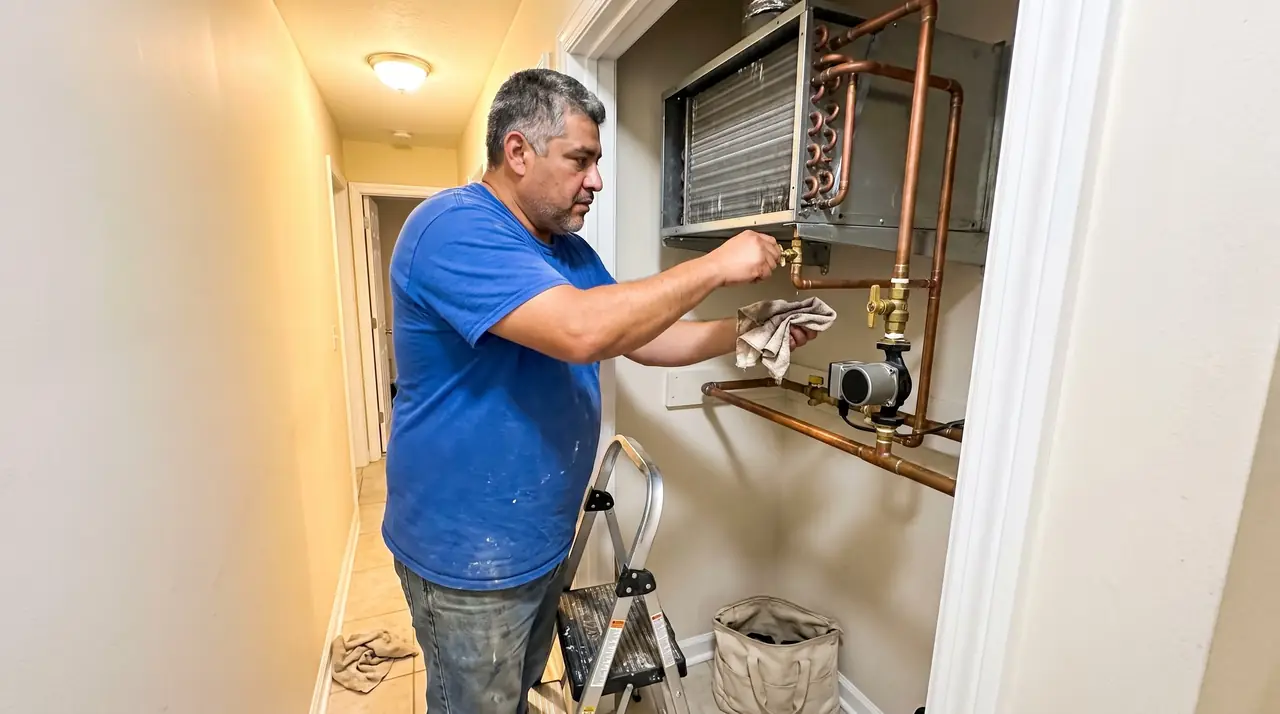
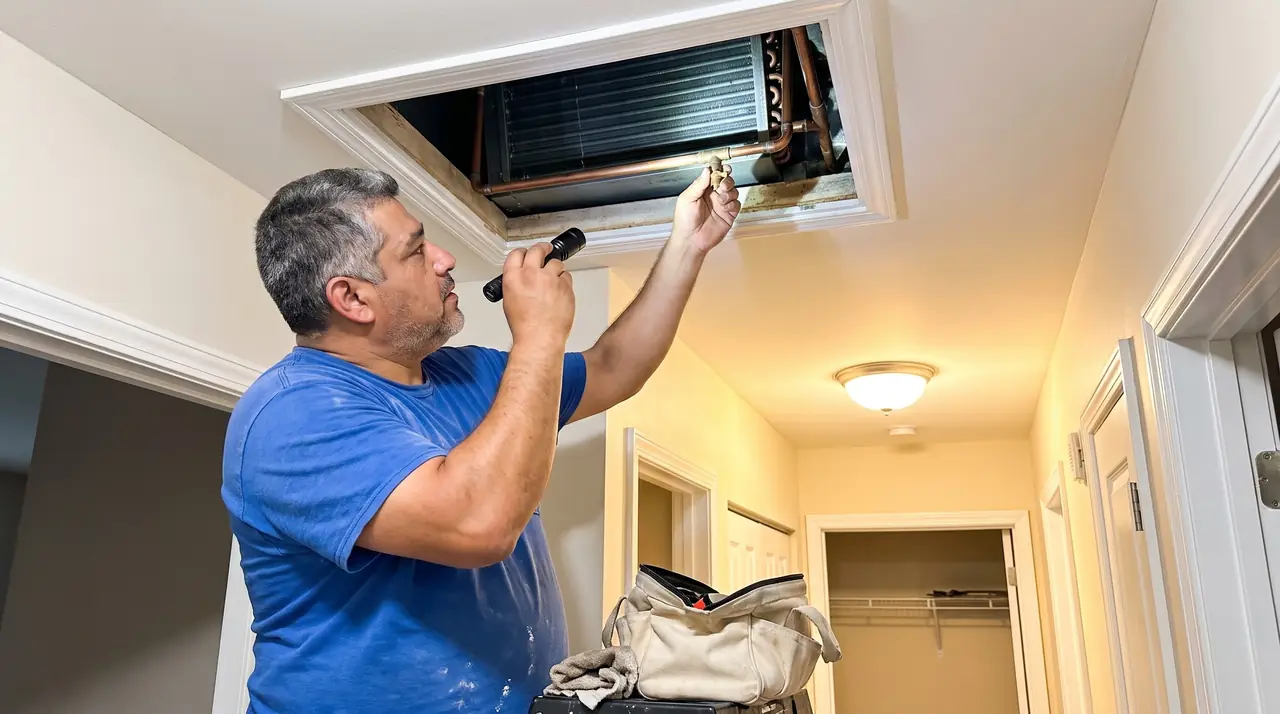
If your condo does not have a traditional furnace but still has forced-air vents, the heating may be coming from a hydronic air handler. Instead of creating heat inside the cabinet, it receives hot water from a boiler or combination water heater and transfers that heat into the air before the blower sends it through your ducts.
Here is what happens when your thermostat calls for heat:
- Thermostat Calls for Heat: The thermostat signals the system that your condo needs warmer indoor air.
- Circulator Moves Hot Water: A pump sends heated water from the boiler or combination appliance toward the air handler.
- Hot Water Warms the Coil: The heated water passes through the coil, raising the temperature of the surrounding air.
- Blower Moves Heated Air: The blower pulls return air across the warm coil and pushes it through your supply ducts.
- Water Returns to Heat Source: After transferring heat, cooler water travels back to the boiler to be reheated.
The important point is that the air handler does not make the heat. The boiler or combination water heater supplies it, while the air handler transfers that heat into the air your condo receives. That is why a failed circulator, zone valve, or hot-water supply can leave the blower running while your vents still deliver cool air.
How Does One Appliance Heat Your Condo and Your Water?
The system works because a combination boiler or other suitable heat source can serve two separate demands. When your home needs heat, hot water is circulated through the air handler's coil. When someone opens a hot-water faucet, the appliance can shift its output toward domestic hot water.
The exact water path depends on the system design. Some hydronic air handlers use a closed heating loop that keeps space-heating water separate from domestic hot water. Other air handlers are specifically rated for open-loop potable-water systems, where water can circulate through the heating coil and later return to the domestic-water system.
The basic arrangement looks like this:
| Component | Job |
|---|---|
| Boiler or combination water heater | Produces the heat |
| Circulator pump | Moves heating water |
| Hydronic coil | Transfers heat into indoor air |
| Blower | Pushes heated air through ducts |
| Domestic hot-water circuit | Supplies showers and fixtures |
| Controls | Determine where available heat is directed |
That shared heat source is one of the biggest advantages of the design. Instead of finding room for a separate furnace and water heater, a condo can use a more compact arrangement that serves both functions.
Why Does Your Heat Pause When Someone Takes a Shower?
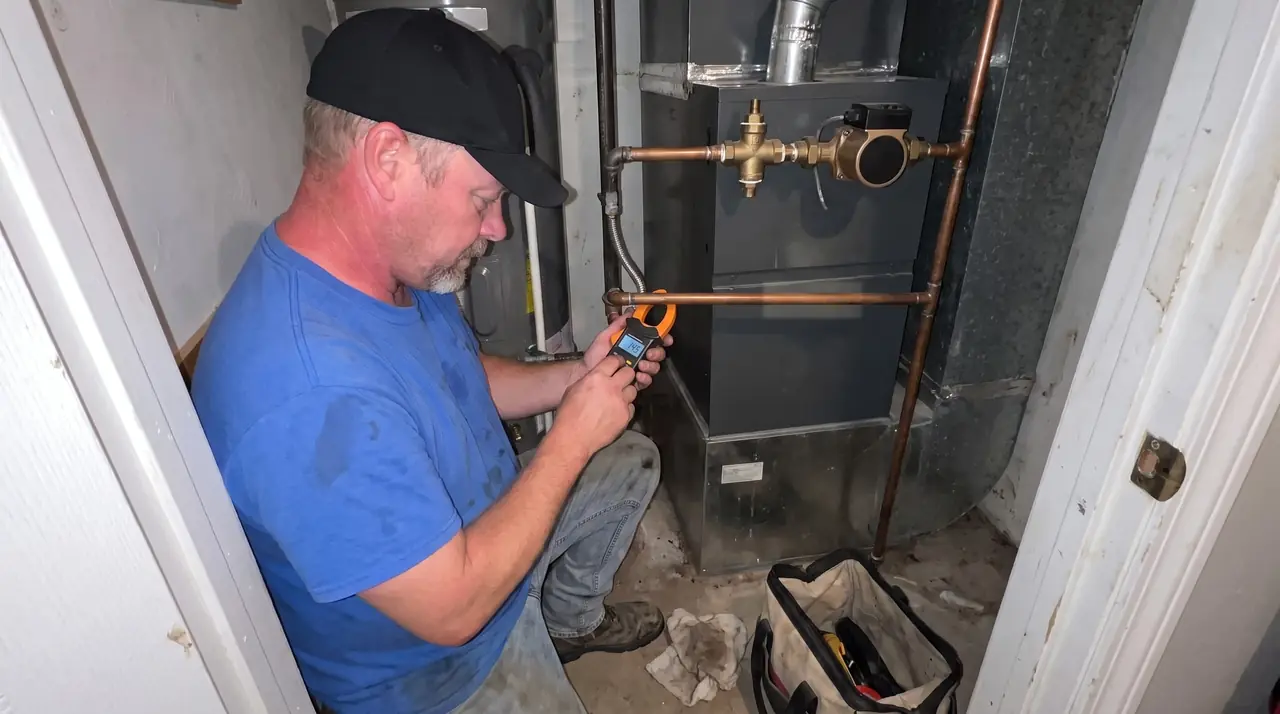
If your heating briefly stops while someone is taking a shower, do not automatically assume something has failed. Many combination systems use domestic hot-water priority, meaning the appliance temporarily directs its available heating capacity toward producing hot water.
When the hot-water demand ends, the system returns to space heating. In a reasonably insulated condo, a short interruption is generally not noticeable because the building does not immediately lose all of its stored heat.
The behavior becomes more noticeable when several people use hot water back-to-back during very cold weather. A larger home or townhome can also expose sizing or control limitations more quickly than a compact condo.
What matters is what happens afterward:
- Heat pauses during hot-water use: Often normal priority operation.
- Heat resumes after the shower: Usually expected.
- Heat does not return: Possible control, circulation, or heat-source problem.
- Blower runs but air stays cool: Hot water may not be reaching the coil.
- Heating becomes increasingly slow: The system may need diagnosis.
The important distinction is between a temporary pause and a system that cannot recover. If the heat remains off long after the hot-water demand ends, that is no longer something to dismiss as normal operation.
Which Components Actually Control Your Heat?
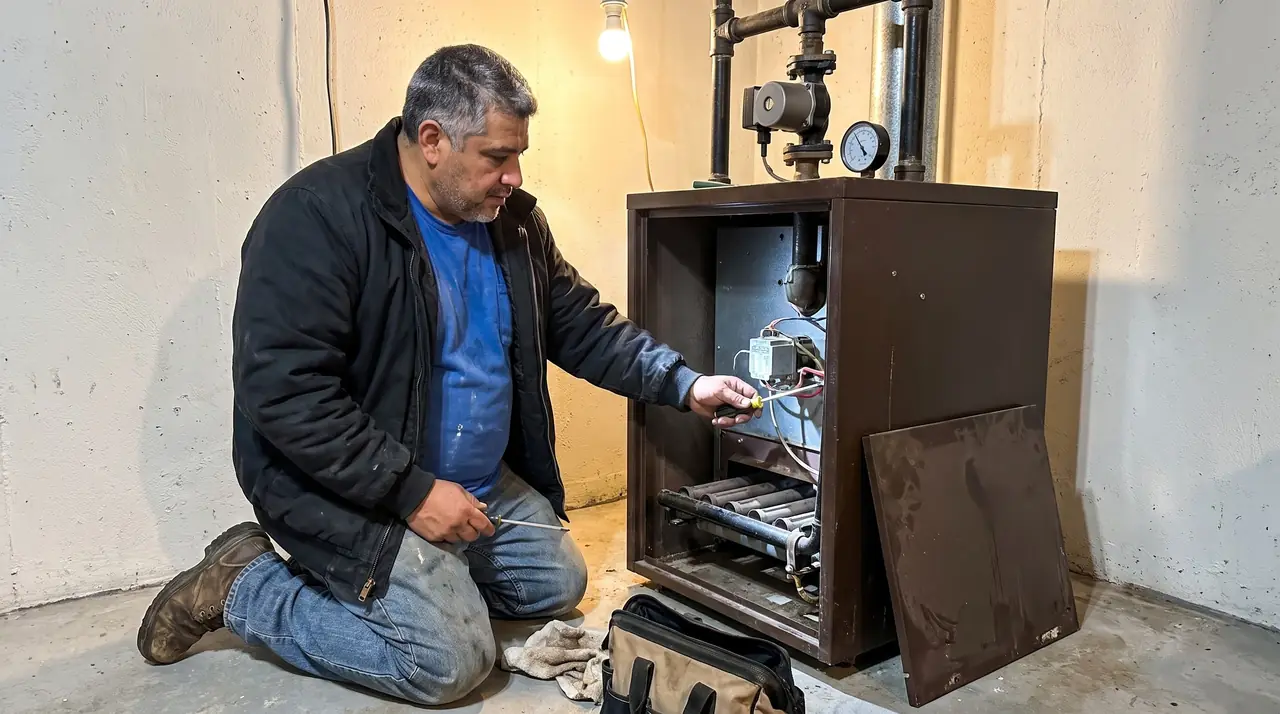
A hydronic air handler has several components that are unfamiliar to homeowners accustomed to furnaces. Knowing their basic jobs can make a service diagnosis much easier to understand, especially when the blower is operating but the air coming from the vents is not warm.
Circulator Pump
The circulator pump moves heated water between the heat source and the hydronic coil. If the pump fails or does not operate when there is a call for heat, the blower can continue running while the coil remains cold.
Zone Valve
A zone valve controls whether hot water is allowed to enter the heating coil. A valve that remains closed can prevent heating even when the boiler or combination appliance is producing hot water normally.
Expansion Tank
Water expands as it heats. The expansion tank provides room for that expansion and helps keep system pressure within the intended range. A problem with the tank can contribute to abnormal pressure and water discharge.
Air Separator and Fill Components
Air trapped inside the hydronic loop can interfere with circulation and create gurgling or rushing-water sounds. Air-separation and fill components help maintain proper circulation and system pressure.
These components explain why hydronic troubleshooting is different from conventional furnace repair. A technician needs to understand both the air side and the water side of the system rather than simply checking whether a burner ignites.
What Safety Requirements Apply to Combination Systems?
When one appliance serves both space heating and domestic hot water, the installation has to account for the different temperature requirements of those two jobs. Space heating can require hotter water than should be delivered directly to a shower or faucet.
That is why properly designed combination systems use components that control domestic hot-water temperature and prevent unsafe conditions. The equipment also needs to be specifically listed or approved for the intended combined application.
Important considerations include:
- Equipment must be approved for combination heating and domestic hot-water use.
- Piping materials must be appropriate for their intended application.
- A suitable ASSE 1017 mixing valve can control domestic hot-water delivery temperature.
- The domestic-water side must be protected from excessive temperatures.
- Open-loop or closed-loop piping must match the equipment's approved design and required water-safety protections.
Where a source-side mixing valve is part of the design, it helps control the temperature sent into the domestic hot-water distribution system. An ASSE 1017 valve controls distribution temperature at the hot-water source and does not replace any point-of-use temperature protection required elsewhere in the plumbing system.
For homeowners, this is one reason combination systems should be installed and serviced by technicians familiar with hydronic and domestic-water systems, rather than treated like a conventional forced-air furnace.
What Problems Can a Hydronic Air Handler Develop?
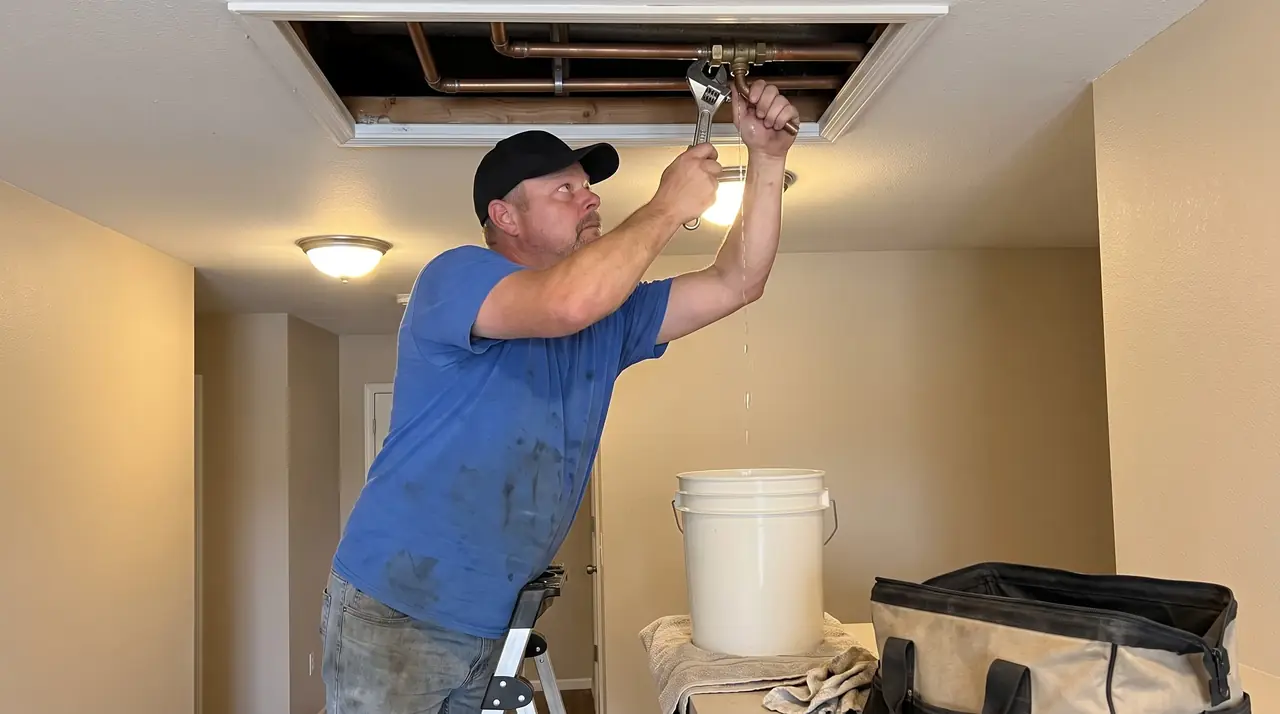
The symptoms from a hydronic system often point toward whether the problem is on the water side or the air side. That distinction can save time during diagnosis because a blower problem requires a very different repair from a circulation problem.
| What You Notice | What It May Indicate |
|---|---|
| Blower runs but air is cool | Hot water may not be reaching the coil |
| Gurgling or rushing sounds | Air may be trapped in the hydronic loop |
| Water near the equipment | Pressure or relief-valve issue |
| Heat stops during a shower | Possible normal domestic-hot-water priority |
| Heat never resumes afterward | Control, valve, pump, or heat-source problem |
| Some rooms stay cold | Airflow or duct distribution issue |
| Domestic water is excessively hot | Mixing-valve or temperature-control concern |
One symptom deserves particular attention: water around the heating equipment. A small amount of condensation may have a simple explanation, but active water discharge, leaking connections, or repeated pressure-related discharge should be evaluated rather than ignored.
Likewise, if your blower operates normally but the supply air remains close to room temperature, the problem may be entirely on the hydronic side. The air handler is doing its job of moving air; it simply may not be receiving the heat it needs.
How Much Does Hydronic Service or Replacement Cost?
Hydronic pricing varies substantially because the problem could involve a single component, the air handler, the boiler, or the piping connecting the two. A circulator or zone-valve repair is obviously a different project from replacing the primary heat source.
For general Denver-area budgeting, recent 2026 pricing data provides these broad planning figures:
| Project | General Planning Range |
|---|---|
| Boiler replacement | $4,150–$10,772 |
| Average boiler replacement | Around $7,361 |
| High-efficiency boiler replacement | $12,000+ in some installations |
| Typical gas-boiler installation labor | Approximately $1,000–$3,000 |
These numbers are planning ranges, not guaranteed Aurora prices. Equipment selection, installation complexity, piping changes, access, venting, and system configuration can move the final cost considerably.
The most useful first step is therefore diagnosis. Replacing an entire boiler because one repairable component has failed does not make sense in every situation, while repeatedly repairing an aging heat source may eventually cost more than replacing it.
What Should Hydronic Maintenance Include?
Hydronic maintenance should address more than the air filter. The system has an entire water circuit that needs to operate correctly, and skipping that side can allow circulation or pressure problems to develop unnoticed.
A useful maintenance visit should include:
- Filter condition and replacement
- Blower wheel and motor inspection
- Hydronic system pressure check
- Expansion tank evaluation
- Circulator pump operation
- Zone valve operation
- Air in the hydronic loop
- Visible piping and connection inspection
The water pressure reading is also something homeowners can learn to recognize. Your system should have an expected operating range, and noticing a significant change from its normal reading gives a technician useful information when troubleshooting.
For a condo owner, annual hydronic maintenance is less about preventing every possible failure and more about identifying circulation, pressure, airflow, and control issues before they become a no-heat call.
Is a Hydronic Air Handler Right for a Condo?
Hydronic air handlers make particular sense where space is limited and a building already has a suitable hot-water heat source. They can provide forced-air heating while the same heat source can potentially provide domestic hot water. The air handler itself has no burner, but in most condos the heat comes from a gas water heater inside the unit, so its venting should be checked and you need working CO alarms near the bedrooms.
| Factor | Hydronic Air Handler | Conventional Gas Furnace |
|---|---|---|
| Heat source | Boiler or combination appliance | Gas furnace |
| Air movement | Blower | Blower |
| Heating medium | Hot water | Heated air |
| Combustion inside air handler | No | Yes |
| Domestic hot water | Can share heat source | Usually separate |
| Key service areas | Pumps, valves, pressure, coil | Ignition, flame, blower, heat exchanger |
Neither system is automatically the right choice for every property. The building's existing infrastructure, equipment location, venting, fuel source, ductwork, domestic-hot-water requirements, and available space all matter.
For Denver-area properties, altitude also deserves attention when combustion equipment is involved. Equipment needs to be selected and configured for the property's elevation rather than assuming a sea-level rating applies without adjustment.
Why Call Havana Solutions When Your Hydronic System Has a Problem?
Hydronic heating involves more than the blower and thermostat. When your condo's heat depends on water circulation, system pressure, valves, and a shared heat source, the diagnosis needs to consider both the air side and the water side before anyone recommends a repair.
Havana Solutions provides HVAC repair and maintenance for homeowners in the Denver-area market. If your blower is running but the air stays cold, your system is making unusual water noises, pressure is changing, or you are seeing water around the equipment, those symptoms are worth diagnosing before they become a larger heating problem.
Call Havana Solutions at (720) 659-2059 or contact us to explain what the system is doing and schedule the next step.
Frequently Asked Questions
Is a hydronic air handler the same as a furnace?
No. A furnace creates heat inside the unit through combustion or electric resistance. A hydronic air handler uses hot water from another heat source to warm a coil, then moves air across that coil and through the ductwork.
Can the same system provide space heating and domestic hot water?
Yes, when the equipment is designed for a combination application. Some systems use separate closed heating and domestic-water circuits, while approved open-loop systems can use potable water as part of the space-heating loop.
Why can the heat pause while someone takes a shower?
Some combination systems give domestic hot water priority. The heat source temporarily focuses on the shower or faucet demand, then returns to space heating when that demand ends.
Why is the blower running if the air is still cold?
The air handler may be moving air normally while hot water is not reaching the heating coil. A circulator pump, zone valve, control, pressure, or heat-source problem can interrupt the water side of the system.
What should hydronic air-handler maintenance include?
Maintenance should cover both sides of the system. That can include the filter, blower, hydronic pressure, circulator operation, valves, expansion tank, visible piping, and signs of trapped air or leakage.

Deivy, Owner of Havana Solutions
NATE Certified · EPA 608 Certified
Deivy founded Havana Solutions in 2022 and still works in the field, helping homeowners with AC, furnace and heat pump problems. He is NATE and EPA 608 certified and explains repair options clearly in English or Spanish.