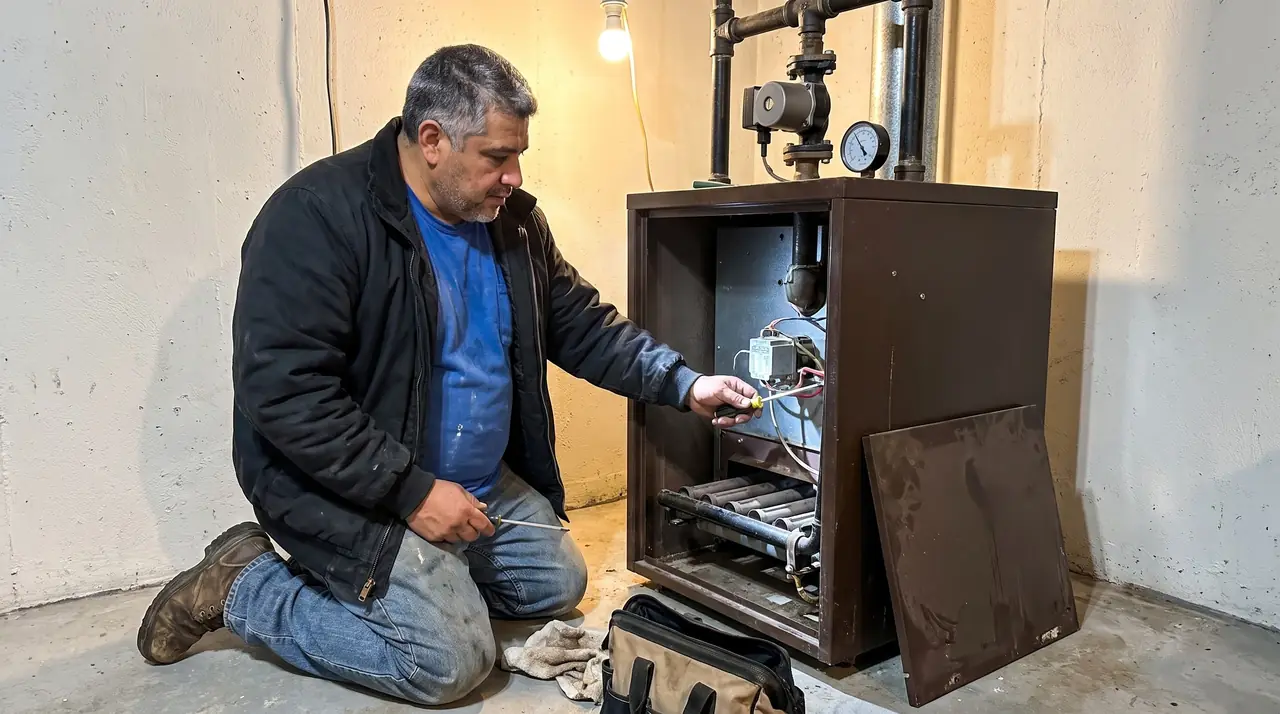
An older boiler rarely announces a problem with a dramatic failure. More often, something changes first: the pressure gauge drops, the radiators take longer to heat, the boiler starts making a new banging sound, or water appears where it should not be. Those changes are worth investigating before a minor fault becomes a winter no-heat call.
The right response depends on the symptom. A pressure reading below the normal range is different from water coming through a relief valve, just as occasional startup noise is different from repeated banging during operation. Understanding those differences helps you decide what you can observe safely, what needs a technician, and when an aging boiler may be approaching the end of its useful life.
What Are the Most Common Problems With an Older Boiler?
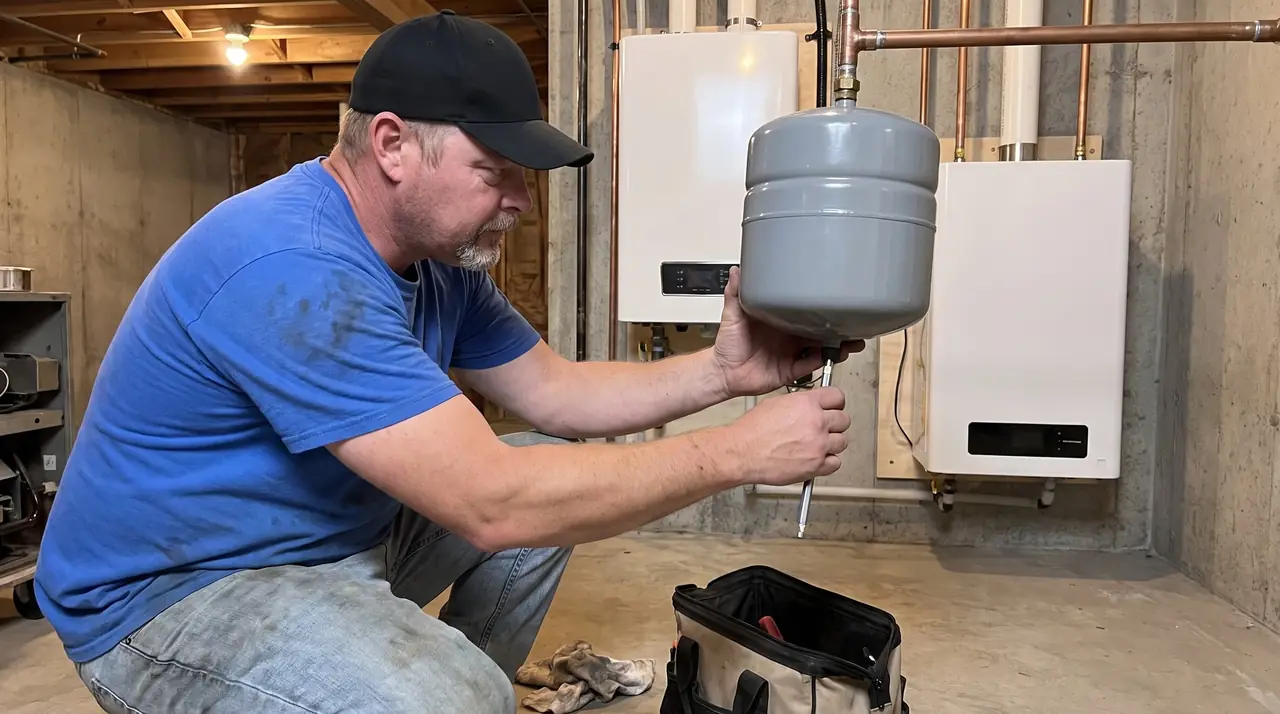
Boiler problems tend to show up through changes in pressure, temperature, circulation, noise, or burner operation. That makes your observations surprisingly useful when you call for service. You do not need to identify the failed component yourself. You simply need to notice what the boiler is doing differently from the way it normally operates.
| What You Notice | What It Can Indicate |
|---|---|
| Pressure gauge reads unusually low | Water loss, a leak, or expansion-tank problem |
| Pressure rises significantly when heating | Expansion tank or pressure-control issue |
| Water around the boiler | Relief-valve discharge, leaking connection, or component |
| Rumbling or banging | Kettling, scale, restricted circulation, or trapped air |
| Radiators heat unevenly | Air, circulation, balancing, or zone-control problem |
| Boiler starts and stops repeatedly | Flow, control, sizing, or temperature problem |
| Thermostat calls but boiler does not respond | Control, ignition, electrical, or safety issue |
A single symptom does not always identify the cause. For example, low pressure can result from a leak, but repeatedly adding water without finding why the pressure is falling can create another problem. The useful first step is documenting what you are seeing and having the underlying cause checked rather than repeatedly treating the symptom.
Why Is My Boiler Making Banging or Rumbling Sounds?
An older boiler can make some operating noise, but a new rumbling, banging, knocking, or kettling sound deserves attention when it was not present previously. Kettling can occur when mineral deposits restrict water flow across the heat exchanger, allowing water to become excessively hot before it moves through the system.
Common contributors include:
- Mineral scale: Deposits can restrict heat transfer and water movement.
- Restricted circulation: A weak circulator or partially closed valve can reduce flow.
- Trapped air: Air in the hydronic loop can interfere with normal circulation.
- Heat exchanger buildup: Deposits can cause localized overheating and noise.
- Control problems: Incorrect operating temperatures can contribute to abnormal cycling.
The sound itself is not enough to confirm kettling. A technician needs to consider circulation, operating temperatures, water condition, pump performance, and the condition of the heat exchanger. If the noise is new or becoming more frequent, addressing it before the boiler is working continuously through the coldest part of winter gives you more options.
What Can I Safely Check Before Calling a Boiler Technician?
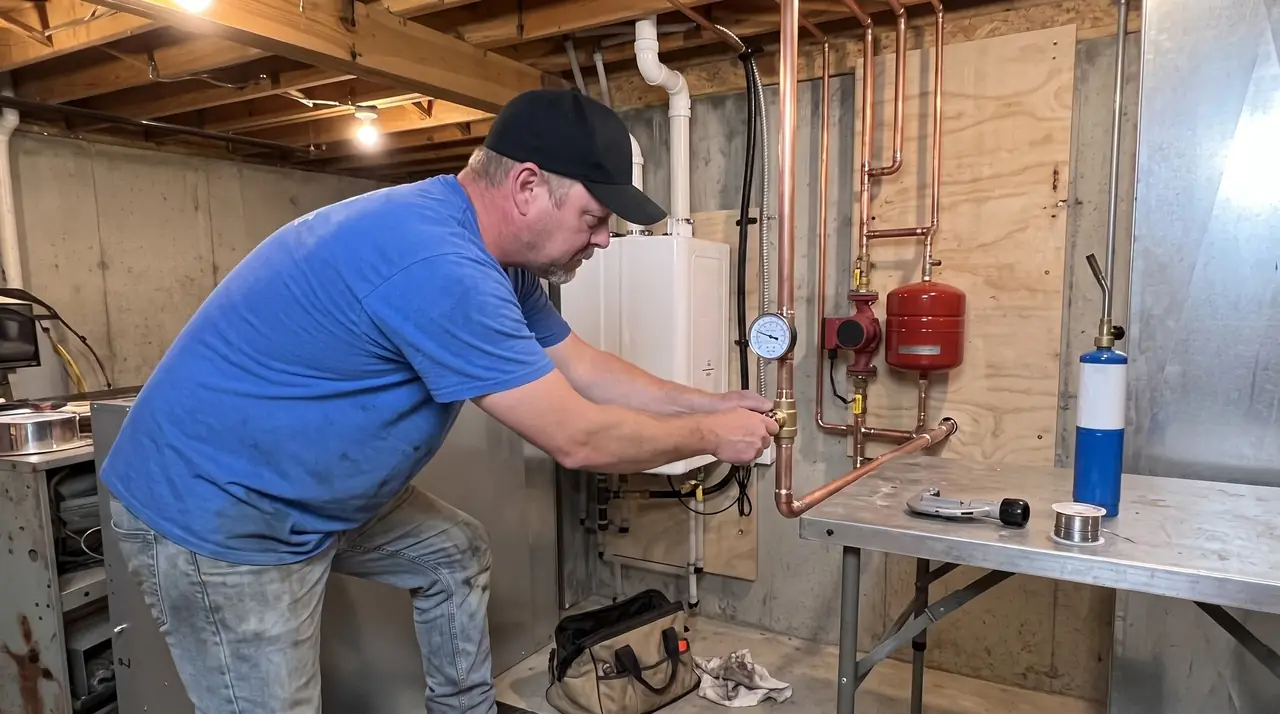
Homeowners can gather useful information without removing panels, adjusting gas components, or working on the pressurized side of the system. The safest approach is observation. A few minutes spent checking the thermostat, gauge, visible piping, and timing of the symptom can give a technician a much clearer starting point.
Read the Pressure Gauge
Check the pressure when the boiler is cold and note the reading. If possible, observe whether it changes substantially after the heating system has operated. Compare the reading with the operating range specified for your boiler.
Check the Thermostat
Make sure the thermostat is actually calling for heat. Confirm that it is in heating mode, has a reasonable temperature setting, and is displaying normally before assuming the boiler itself has failed.
Look for Visible Leaks
Check accessible areas around the boiler for water, staining, corrosion, or mineral deposits. Do not remove covers or reach inside the appliance to investigate a leak.
Listen for New Sounds
Pay attention to when the sound occurs. A noise during startup, continuous rumbling while heating, and a sound that appears only when a particular zone operates can point toward different areas of the system.
Record When the Problem Started
Write down whether the problem is constant or intermittent and whether anything changed beforehand. Recent maintenance, radiator work, unusual weather, or changes to thermostat settings can all be useful context.
These observations are enough to help a technician understand what changed. Avoid adjusting burners, opening combustion compartments, bypassing safety controls, or disassembling the boiler yourself. Gas-fired, pressurized equipment requires proper testing to identify the actual cause. If the problem continues, professional boiler repair service can diagnose the fault safely and determine the appropriate next step.
When Is an Old Boiler Problem an Emergency?
Most boiler problems do not require homeowners to panic or shut the entire system down immediately. However, certain signs are different because they can indicate a combustion, gas, carbon-monoxide, electrical, or significant water-related hazard. Knowing those signs ahead of time is more useful than trying to make the decision while the boiler is malfunctioning.
| What You Notice | Appropriate Response |
|---|---|
| Rotten-egg or sulfur-like gas odor | Leave right away. Don’t flip switches, use phones, or light anything on the way out. From outside, call Xcel at 1-800-895-2999 or 911. |
| Carbon monoxide alarm activates | Get everyone outside and call 911. |
| Soot or scorching around the appliance | Stop using the boiler and arrange urgent professional inspection |
| Water reaching electrical components | Stop using the equipment and arrange professional service |
| Significant or continuous water discharge | Shut down if safe and request prompt service |
| Boiler repeatedly locks out | Arrange professional diagnosis rather than repeatedly resetting it |
Gas odor and a carbon monoxide alarm should never be treated as ordinary boiler-repair situations. Get everyone to a safe location first and follow the appropriate emergency procedure. Do not remain inside trying to identify the source.
For less urgent symptoms, such as gradually falling pressure or new operating noise, scheduling service before the problem escalates is usually the better approach. An older boiler does not necessarily need replacement simply because it has developed a fault, but the longer a known problem is ignored, the fewer opportunities you may have to make a controlled repair decision.
Should You Repair or Replace an Old Boiler?
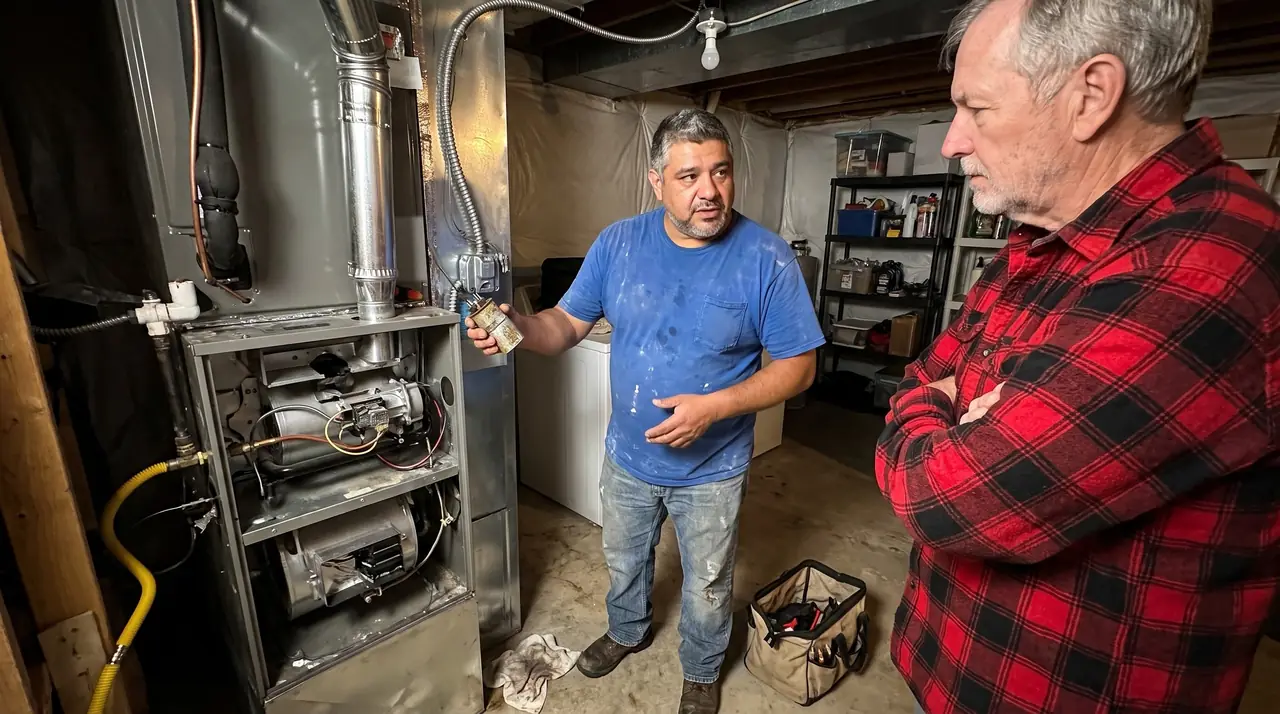
Age is useful context, but it should not be the only reason to replace a boiler. A 15-year-old system with one failed pump is a very different proposition from a 20-year-old boiler with repeated pressure problems, obsolete components, poor efficiency, and a major heat-exchanger issue. Condition, repair history, parts availability, and operating performance should be considered together.
| Factor | Repair May Make Sense | Replacement Deserves Consideration |
|---|---|---|
| Age | Relatively younger equipment | Older equipment nearing the end of its service life |
| Repair | Isolated component failure | Major or repeated failures |
| Parts | Readily available | Difficult or obsolete parts |
| Pressure | Generally stable | Repeated pressure loss |
| Efficiency | Still acceptable | Increasing fuel use or poor performance |
| Service history | Occasional repairs | Frequent heating-season repairs |
For general planning purposes, boiler replacement in the Denver-area market can commonly fall around $4,150 to $10,772, with higher-efficiency installations potentially reaching $12,000 or more depending on equipment, labor, venting, piping, controls, and site conditions. These are budgeting ranges, not a quote for a specific Aurora home.
The heat exchanger deserves particular attention when discussing replacement. A major heat-exchanger failure on an older boiler can change the economics quickly because you are putting substantial repair money into equipment that may have other aging components.
A qualified technician should explain the repair, expected remaining service life, replacement options, and total costs rather than pushing you toward either choice automatically.
Why Choose Havana Solutions for Boiler Service in Aurora?
When an older boiler starts behaving differently, getting it running again is only part of the job. You also want to know what caused the symptom, whether the repair is likely to hold, and what the condition of the system means for the next heating season.
Whether the issue is falling pressure, unusual noise, circulation trouble, repeated cycling, or a boiler that will not respond to the thermostat, the diagnosis should come before the recommendation. Havana Solutions provides repair and maintenance services for homeowners across the Aurora area.
If you need boiler repair in Aurora, call Havana Solutions at (720) 659-2059 or contact us to discuss what the system is doing and the next step.
Frequently Asked Questions
How often should an old boiler be serviced?
An older boiler benefits from regular professional inspection because problems with pressure, combustion, circulation, controls, and safety components can develop before the homeowner notices a major heating issue. The appropriate service interval depends on the equipment and manufacturer recommendations.
Is low boiler pressure always a sign of a leak?
No. Low pressure can have several causes, including recent system work, expansion-tank problems, or water loss elsewhere in the heating loop. However, pressure that repeatedly drops should be investigated rather than continually corrected by adding more water.
Is a banging boiler dangerous?
Banging does not automatically mean the boiler is unsafe, but a new or worsening sound should not simply be dismissed as normal because the equipment is old. Kettling, restricted circulation, scale, or other operating problems can create unusual noise and should be diagnosed.
How long can an old boiler last?
There is no single replacement age that applies to every boiler. Maintenance history, water quality, installation quality, operating conditions, parts availability, and the condition of major components all affect useful life. A technician can assess the condition of your specific equipment.
Should I replace my boiler if it still works?
Not necessarily. If the boiler is reliable, safe, reasonably efficient, and repair costs remain manageable, continued service may make sense. Replacement becomes more worth considering when major components fail, repairs become frequent, parts are difficult to obtain, or operating costs and reliability have deteriorated.

Deivy, Owner of Havana Solutions
NATE Certified · EPA 608 Certified
Deivy founded Havana Solutions in 2022 and still works in the field, helping homeowners with AC, furnace and heat pump problems. He is NATE and EPA 608 certified and explains repair options clearly in English or Spanish.